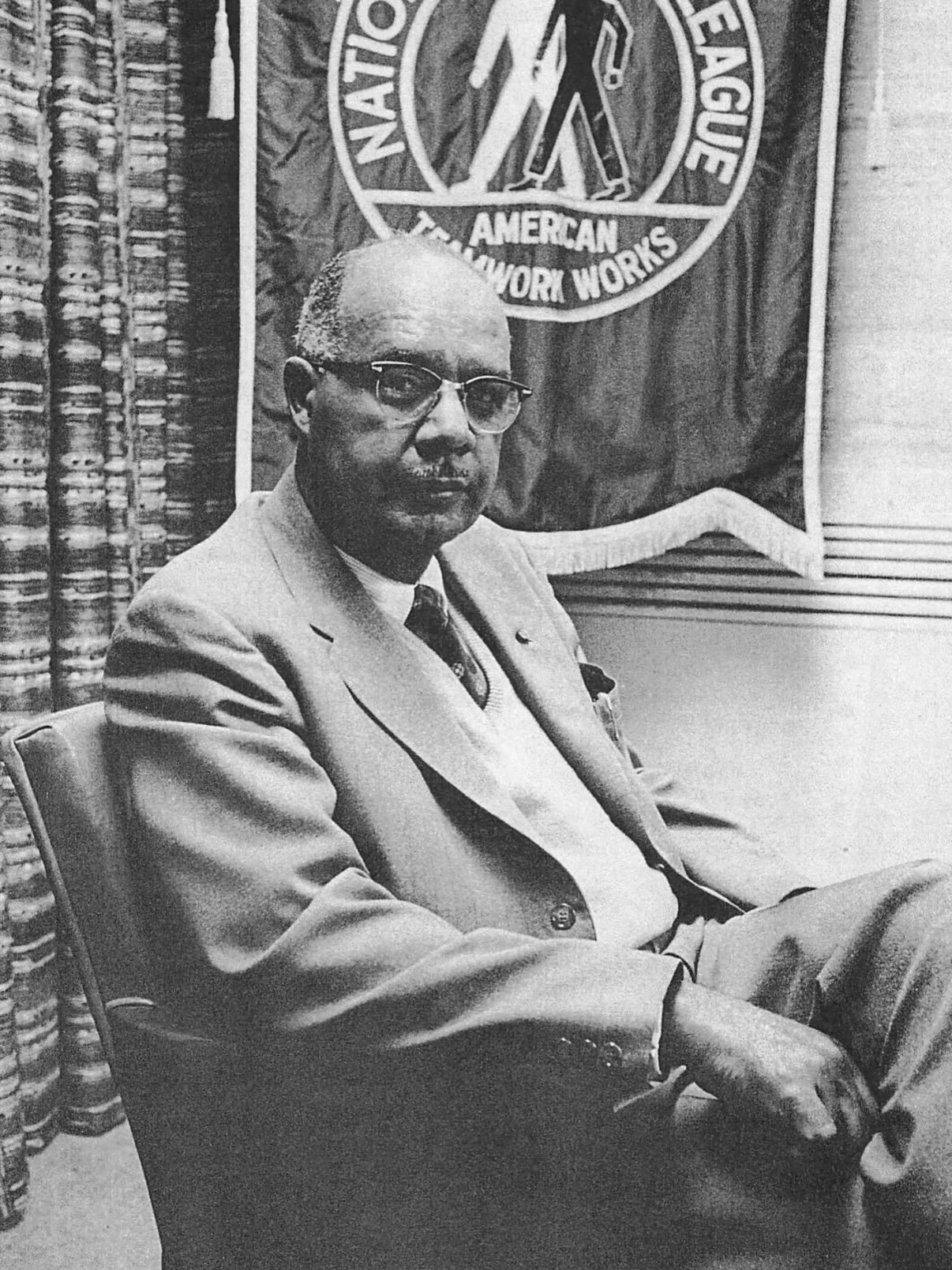
The first biography of Lester Blackwell Granger.
For twenty years, Granger led the National Urban League, directing a nationwide effort to break racial barriers in employment, housing, education, and American public life.
During World War II, he traveled some 60,000 miles through the U.S. Navy, investigating the treatment of Black sailors and developing recommendations that helped dismantle segregation in the service.
He spent his career figuring out how to make American institutions change.
Yet nearly fifty years after his death, no one has told the full story of his life.
From 1941 to 1961, Granger directed one of the country’s major civil-rights organizations. The National Urban League maintained a network of affiliates and professional staff across the country, working to open jobs, improve housing and social services, challenge discriminatory practices, and give Black Americans greater access to the institutions shaping everyday life.
Granger’s role was national. He worked with local Urban League leaders, corporate executives, labor unions, foundations, social workers, educators, and government officials—building pressure for change inside the institutions that controlled opportunity.
During World War II, Granger became a civilian adviser to Secretary of the Navy James Forrestal. He traveled some 60,000 miles through the fleet and shore establishment, interviewing thousands of Black and white sailors and investigating how segregation actually operated. His recommendations helped shape the reforms through which the Navy dismantled its system of racial segregation—years before President Truman ordered desegregation across the armed forces.
Despite the scale of Granger’s career, no full-length biography of him has ever been published. I began this project to understand how someone who occupied such consequential positions in twentieth-century American life could have largely disappeared from public memory.
I also come to the project through family. I am Richard Augustus Granger II; my great-grandfather Augustus was one of Lester’s brothers.
This will be the first full-length account of Granger’s life, built from his manuscripts and oral histories, contemporary newspapers, government records, and archival collections across the country. Being family gives me a reason to ask questions; it doesn’t give me the answers. Family stories and Granger’s own recollections are treated as evidence to investigate and corroborate, not facts to repeat.
Why This Book
Researchers, archivists, and members of the Granger, Lane and Turpin families: I would be glad to hear from you.
Help the Project